Main Conclusions of the B-debate on Antimicrobial Resistance
The document provides recommendations to tackle the global threat of bacterial resistance to antibiotics
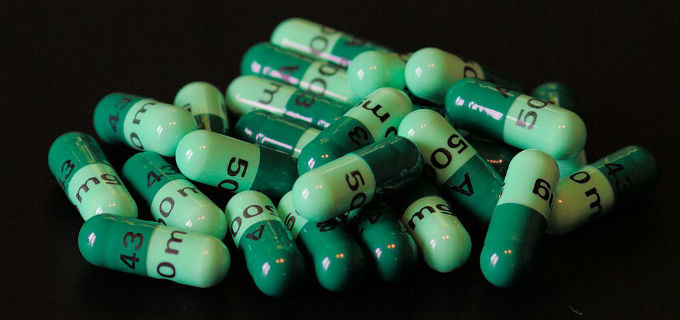
26.06.2015Photo: Foto by Sage Ross (Own work) [CC BY-SA 3.0 (http://creativecommons.org/licenses/by-sa/3.0)], via Wikimedia Commons
A group of experts, including Dr. Jordi Vila, director of the Antibiotic Resistance Initiative at ISGlobal, has published the conclusions of the scientific debate that took place in Barcelona on the global threat of antimicrobial resistance. The goal of the meeting, organized jointly by Biocat and ISGlobal and Bio-Cat, was to launch a debate among the main stakeholders in order to define a coordinated and multifaceted approach to fight antimicrobial resistance.
The document, published in the journal New Microbes and New Infections, resumes the views and recommendations that emerged during the debate, focused on three main areas:
Antimicrobial resistance in animals and the food chain: The massive use of antibiotics to prevent and treat infections in farm animals has increased the selective pressure on pathogenic and non-pathogenic microorganisms that can spread to humans through direct contact, the food chain or pollution of farm effluents. The experts recommend that antimicrobial agents critical for human health be identified and avoided for animal use. In this context, the WHO has established a list of antibiotics for exclusive human use, although it is neither regulated nor mandatory.
Antimicrobial resistance in the environment and the community: Inappropriate prescription and consumption of antibiotics, together with self-medcation, reflect a lack of awareness on the risks of antimicrobial resistance. To tackle this, the experts recommend the establishment of educational programs on the rational use of antibiotics addressed to different community sectors. In low-income countries there is the additional problem of lack of efficacy of certain antibiotics (including counterfeit drugs), insufficient dosages and poor levels of sanitation that increase the selection of resistant bacteria. In addition, the accumulation of these compounds in the environment further selects resistant organisms by generating a gigantic reservoir for resistance genes. The authors point out that the current legislation does not address antibiotic concentrations in sewages and water treatment plants.
Antimicrobial resistance within healthcare settings: Hospitals represent an ideal scenario for the spread of resistant bacteria and the transfer of resistance genes. The implementation of stewardship programs that guide the type, dosage, and treatment regime should be mandatory. In addition, the rapid detection of resistance mechanisms and the identification of bacterial species and their resistance profiles will be an extremely useful tool for surveillance studies.
The authors emphasize the urgent need to relaunch the research and development of new antimicrobial agents based on innovative strategies that combine pharmaceutical and public health interests.
Tackling the problem of antibiotic resistance will require global and collaborative effort from the general population, the scientific community and policymakers. The benefits of winning the battle are not only medical but also economical: antibiotic-resistant infections cause an estimated loss of 30,000 million USD in USA and 1,500 million USD in Europe every year.
Reference:
Roca I, Akova M, Baquero F, Carlet J, Cavaleri M, Coenen S, et al. The global threat of antimicrobial resistance: science for intervention. 2015. New Microbes New Infect. Apr 16;6:22-9
You will not find any advertising or personalised tracking cookies on this website. We only use our own and third party cookies to improve your browsing experience, to protect your privacy, to know how many people visit us and what content is of most interest, such as Google's analytics cookies. You can "Accept All Cookies", "Reject Optional Cookies" (except necessary technical cookies) and "Configure Cookies". Please refer to our Cookie Policy and Privacy Policy for more details.
Our website www.isglobal.org (the "Website") uses cookies to collect information on how the Website is used.
A cookie is a file downloaded onto your machine (computer or mobile device) for storing data that may be updated and retrieved by the entity that installed it.
The information collected via cookies may include the date and time you visited the website, the pages you viewed, the time you spent on our website and the websites you visited before and after visiting our site.
We use cookies to facilitate your browsing of our Website, distinguish you from other users, provide you a better use experience and identify problems with our Website. If you provide your consent, we will use cookies to obtain information on your preferences and tailor our Website to your interests.
The purpose of this cookies policy is to provide you with clear and precise information on the cookies used on our Website (the "Cookies Policy"). For more information on the cookies used on our Website, please email your questions to the Data Protection Officer: lopd@isglobal.org.
Type of cookies used on the Website
Our Website uses the cookies described below.
First-party cookies
These cookies are sent to your computer and handled only by us to improve the operation of the Website. Information collected is used to improve the quality of our service and your user experience. These cookies remain in your browser for longer. This allows us to recognise you when you return to the Website and tailor the content offered to your preferences.
Third-party analytics cookies
Interacting with the content of our Website can also cause the installation of third-party cookies (e.g., when you click on social network buttons or watch videos hosted on our Website). Third-party cookies are installed by other domains; not ours. We cannot access the data stored in the cookies of other websites when you browse those websites.
Our Website uses Google Analytics audience measurement system, Facebook, First Party, Twitter, Vimeo, YouTube, Instagram, Issuu and Opinion Stage. These tools allow us to know how users interact with our Website. We use "persistent" cookies. Persistent cookies store data on your terminal that can be accessed and processed during a defined time period by the owner of the cookie. This time period could be anything from a few minutes to several years.
Below is a list of cookies according to the purpose for which the data obtained is processed:
Technical cookies. These cookies allow you to browse a webpage, platform or application and use the options of the services you find there. For instance, they are used for monitoring web traffic and data communication, identifying the session, providing access to restricted areas, remembering elements in an order, carrying out the purchasing process of an order, performing a request for enrolment or participation in an event, using security elements during browsing, storing content for the playing of audiovisuals, and sharing content via social networks.
Personalisation cookies. These allow you to access the service and have some general characteristics predefined based on a series of criteria found in your terminal, such as language, browser type with which you are accessing the service, regional configuration from where you are accessing the service, etc.
Analytics cookies. These cookies allow monitoring and analysing user behaviour on a website. Information collected via this type of cookie is used to measure the activity of websites, applications or platforms and for creating the browsing profiles of users of these sites, applications and platforms. This allows introducing improvements based on the analysis of user usage of the service.
Advertising cookies. These allow managing, in the most effective manner possible, advertising spaces.
Behavioural advertising cookies. These cookies store information on user behaviour obtained via the continual monitoring of their browsing habits, which allows creating a specific profile for displaying targeted advertising based on this information.
External social network cookies. These cookies are used so visitors to websites can interact with the content of social networks (Facebook, YouTube, Twitter, LinkedIn, etc.). They are generated only for the users of these social networks. The conditions of use of these cookies and the information collected is governed by the privacy policy of the social network platform in question.
Along with our server's log files, these cookies tell us the total number of visitors to our Website and which parts of our site are the most popular. Thanks to them, we obtain information that helps us improve browsing and provide a better service to our users and clients.
By browsing and remaining on our Website, you provide consent for our use of the cookies described for the time periods specified under the conditions of this Cookies Policy.
Disabling and blocking cookies
Cookies are not required for using our Website. You can block and disable cookies by configuring your browser to block the installation of all or some cookies. Most browsers can be set to warn you of the presence of cookies or block them automatically. If you block cookies, you may continue using our Website. However, the use of some of its services may be limited, and your user experience may be diminished.
Withdrawing your consent
If at any time you want to withdraw the consent you gave under this Cookies Policy, delete the cookies stored on your machine (computer or mobile device) via the settings and configuration of your web browser.
For more information on deleting, disabling or blocking cookies, visit this page.
Changing your browser's cookie configuration and settings
Unless you have adjusted your browser's configuration, our system creates cookies when you visit our Website. All web browsers allow changing this configuration.
Click on the links below for how to adjust the cookie configuration of the following browsers:
We may update the Cookies Policy of our Website from time to time. We recommend that you review this policy each time you visit our Website so that you are adequately informed on how and for what we use cookies. The Cookies Policy was last updated on March 11, 2020.
Contact
For any query, comment or suggestion regarding our Cookies Policy, please email the Data Protection Officer: lopd@isglobal.org.
[Updated on March 11, 2020 · Photo: Christopher Burns / Unsplash]
In accordance with the current data protection regulations, ISGlobal informs you of the following:
When you are requested to provide personal data for the provision of services, you will be informed of what data you must provide.
If you do not provide this required data, we will not be able to provide you with the services. The personal data you provide or that ISGlobal obtains as a result of your browsing, queries or requests via our webpage at www.isglobal.org (the “website”) will be included in a file owned by ISGlobal for managing, storing and tracking your requests for information and/or contracting of goods or services offered via the website. The information obtained from you by ISGlobal from the website when you sign up for a promotional event or send a form is processed with the utmost confidentiality for helping you to take part in the event in question or, in the second case, sending you the information you requested. The information obtained is not used for any other purpose. The personal data provided will not be disclosed or transferred to third parties without your consent.
When the completion of a form is requested, the user will be informed of the identity and data of the data controller and the Data Protection Officer, the purposes and legal basis of the treatment, the recipients of the data as well as, where appropriate, the international data transfers, the data retention periods and the user's ability to exercise their rights of access, rectification, deletion, portability, limitation and / or opposition to treatment, the right complaint to the control authority and the existence of automated decisions. The personal data collected will only be processed and / or transferred for the express purpose, and always with the consent of the user.
Information is only sent via the form(s) of the website after you have expressed your acceptance by selecting an "ACCEPT/SEND" (or similar) button, via which ISGlobal has proof that you gave your consent for it to process your personal data.
In all cases, you guarantee that the data you provide is true, exact, complete and up-to-date. ISGlobal may decline to provide the information or services requested to any user providing false data without prejudice to any other legal action open to it.
In virtue of Article 22 of Spanish Law 34/2002, of July 11, on the Information Society Services and Electronic Commerce, ISGlobal may store and retrieve "cookies" (data in a text file) from your machine, provided you have given consent and after we have provided you with clear and complete information on the use of these cookies. You may obtain complete information on the purpose for installing these cookies and what they are used for in ISGlobal's Cookies Policy.
This does not prevent any technical storage or access for the sole purpose of carrying out or facilitating the transmission of a communication over an electronic communications network, or as strictly necessary to provide an information society service expressly requested by you.
You may exercise your rights of access, rectification, erasure, objection, portability and restriction of the processing by sending a request to the Data Protection Officer via email (lopd@isglobal.org) or the ISGlobal postal address: c/ Rosselló, 132, 08036 Barcelona, Spain. The request must include your full name, address for notices, a photocopy of your ID document or passport and an indication of the right you want to exercise.
If you are unhappy with the processing done by ISGlobal or believe that your rights have been violated, you may file a claim with the Spanish Data Protection Agency at any time (www.aepd.es – C/ Jorge Juan, 6, Madrid).
ISGlobal has implemented the necessary technical and organizational security measures in order to guarantee the security of your personal data and prevent its alteration, loss, treatment and / or unauthorized access, considering the state of technology, the nature of the stored data and the risks to which they are exposed, whether they come from human action or the physical or natural environment, all in accordance with the provisions of current regulations.
In accordance with Law 34/2002, of 11 July, on the Services of the Information Society and Electronic Commerce, if you do not wish to receive electronic commercial notices from ISGlobal in the future, you may inform us of this preference by sending an email to the Data Protection Officer (lopd@isglobal.org).
[Updated on March 11, 2020 · Photo: Gilles Lambert / Unsplash]
Your Privacy
When you visit any website, it may store or retrieve information on your browser, mostly in the form of cookies. This information might be about you, your preferences or your device and is mostly used to make the site work as you expect it to. The information does not usually directly identify you, but it can give you a more personalized web experience. Because we respect your right to privacy, you can choose not to allow some types of cookies. Click on the different category headings to find out more and change our default settings. However, blocking some types of cookies may impact your experience of the site and the services we are able to offer.
These cookies are necessary for the website to function and cannot be switched off in our systems. They are usually only set in response to actions made by you which amount to a request for services, such as setting your privacy preferences, logging in or filling in forms. You can set your browser to block or alert you about these cookies, but some parts of the site will not then work. These cookies do not store any personally identifiable information.
Cookies Details
Cookie
Management
Duration
Aim
COOKIE_SUPPORT
First Party
50 years
A cookie that checks whether cookies are enabled in your browser.
GUEST_LANGUAGE_ID
First Party
50 years
Cookie used to remember the user's language preferences.
JSESSIONID
First Party
Session
Cookie used to manage web applications.
LFR_SESSION_STATE
First Party
Session
Liferay uses these cookies to manage your access ID
USER_UUID
First Party
Session
Liferay uses these cookies to manage your access ID
cp_sessionid
First Party
5 years
CK_CONSENT
First Party
1 year
A cookie used to confirm the user's acceptance of first level cookies in response to the cookie warning.
COMPANY_ID
First Party
Session
Liferay company identifier
ID
First Party
Session
Liferay uses these cookies to manage your access ID
ck_fbanner
First Party
14 days
A cookie used to check if the user already close footer banner.
ck_newsletter
First Party
14 days
A cookie used to check if the user already close newsletter popup.
1P_JAR
Google
1 month
These cookies are used to collect website statistics and track conversion rates.
APISID
Google
2 years
Used by Google to store user preferences and information of Google
HSID
Google
2 years
Used by Google to store user preferences and information of Google
NID
Google
6 months
Advertising cookie used to tailor the advertisements shown to the interests of the user.
S
Google
Session
Used by Google to store user preferences and information of Google
SAPISID
Google
2 years
Used by Google to store user preferences and information of Google
SID
Google
2 years
Used by Google to store user preferences and information of Google
SIDCC
Google
3 months
Used by Google to store user preferences and information of Google
SSID
Google
2 years
Used by Google to store user preferences and information of Google
__Secure-3PAPISID
Google
2 years
Used by for targeting purposes to build a profile of the website visitor's interests in order to show relevant & personalised Google advertising
__Secure-3PSID
Google
2 years
Used by for targeting purposes to build a profile of the website visitor's interests in order to show relevant & personalised Google advertising
__Secure-3PSIDCC
Google
2 years
Used by for targeting purposes to build a profile of the website visitor's interests in order to show relevant & personalised Google advertising
CONSENT
Google
20 years
Used by Google to store user preferences and information of Google
vuid
Vimeo
2 years
A Vimeo Analytics cookie that provides a single id.
APISID
YouTube
2 years
These cookies are set via embedded YouTube videos. They register anonymous statistical data
HSID
YouTube
2 years
These cookies are set via embedded YouTube videos. They register anonymous statistical data
LOGIN_INFO
YouTube
2 years
These cookies are set via embedded YouTube videos. They register anonymous statistical data
PREF
YouTube
2 years
Cookie that remembers information that changes the appearance or behaviour of the web site, such as the user's preferred language or region.
SAPISID
YouTube
2 years
These cookies are set via embedded YouTube videos. They register anonymous statistical data
SID
YouTube
2 years
These cookies are set via embedded YouTube videos. They register anonymous statistical data
SIDCC
YouTube
1 year
Used as security measure to protect users data from unauthorised access
SSID
YouTube
2 years
These cookies are set via embedded YouTube videos. They register anonymous statistical data
VISITOR_INFO1_LIVE
YouTube
1 year
A cookie that YouTube sets that measures your bandwidth to determine whether you get the new player interface or the old.
YSC
YouTube
Session
This cookie is set by the YouTube video service on pages with embedded YouTube video
CONSENT
YouTube
20 years
Used by Google to store user preferences and information of Google
__Secure-3PAPISID
YouTube
2 years
Used by for targeting purposes to build a profile of the website visitor's interests in order to show relevant & personalised Google advertising
__Secure-3PSID
YouTube
2 years
Used by for targeting purposes to build a profile of the website visitor's interests in order to show relevant & personalised Google advertising
__Secure-3PSIDCC
YouTube
2 years
Used by for targeting purposes to build a profile of the website visitor's interests in order to show relevant & personalised Google advertising
iutk
issuu
10 years
Recognises the user's device and what Issuu documents have been read.
_initial_referrer
infogram
Session
Tells Infogram which site is embedding the content
These cookies allow us to count visits and traffic sources so we can measure and improve the performance of our site. They help us to know which pages are the most and least popular and see how visitors move around the site. All information these cookies collect is aggregated and therefore anonymous. If you do not allow these cookies we will not know when you have visited our site, and will not be able to monitor its performance.
Cookies Details
Cookie
Management
Duration
Aim
_ga
Google Analytics
2 years
This cookie is used to distinguishes unique users by assigning a randomly generated number as a client identifier. It is included in each page request in a site and used to calculate visitor, session and campaign data for the sites analytics reports.
_gat
Google Analytics
1 minute
Used to throttle the request rate – limiting the collection of data on high traffic sites.
Some of these cookies are set by a range of social media services that we have added to the site to enable you to share our content with your friends and networks. They are capable of tracking your browser across other sites and building up a profile of your interests. This may impact the content and messages you see on other websites you visit. If you do not allow these cookies you may not be able to use or see these sharing tools. Some other of these cookies may be set through our site by our advertising partners. They may be used by those companies to build a profile of your interests and show you relevant adverts on other sites. They do not store directly personal information but are based on uniquely identifying your browser and internet device. If you do not allow these cookies, you will experience less targeted advertising.
Cookies Details
Cookie
Management
Duration
Aim
_gcl_au
Google
3 months
Used by Google for experimenting with advertisement efficiency
IDE
Google (doubleclick)
13 months
Used by Google to show relevant advertising to the viewer across the web
datr
Facebook
2 years
This cookie is used by facebook for security, to stop DDOS/fake accounts and to protect users content
sb
Facebook
2 years
Allow you to control the “Follow us on Facebook” and “Like” buttons, collect the language settings and allow you to share the page.
_fbp
Facebook
3 months
Store and track visits across websites.
auth_token
Twitter
10 years
Track visitor activity from Twitter ads on our website, and also allow users to share content from our websites. They cookies do not provide us with any confidential information relating to your account.
dnt
Twitter
10 years
These cookies enable users, if they wish, to login to their Twitter account share content from our websites with their friends. These cookies do not allow us access to your accounts or provide us with any confidential information relating to your accounts.
twid
Twitter
10 years
Track visitor activity from Twitter ads on our website, and also allow users to share content from our websites. They cookies do not provide us with any confidential information relating to your account.
wide
YouTube
Session
These cookies are set via embedded YouTube videos. They register anonymous statistical data